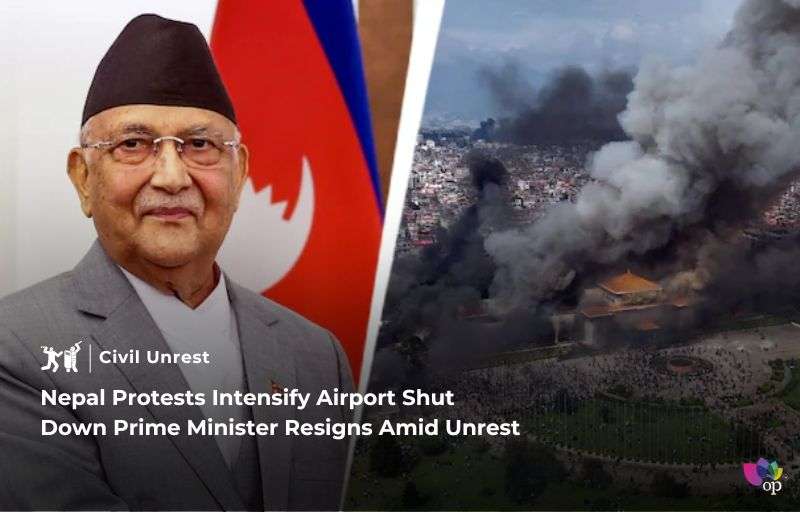
According to the reports on Tuesday (09 September), Tribhuvan International Airport in Kathmandu was completely shut down as protests escalated across the Kathmandu Valley. Smoke was reported near the airport while authorities deployed tear gas to disperse demonstrators, and the Nepali Army was called in to secure the area. The closure reflected the severity of the unrest and the growing tensions between the government and citizens.
The protests intensified following a nationwide social media blackout, which the government later lifted, but demonstrations continued. Many protesters, led by Gen-Z activists, defied curfews and engaged in acts of civil disobedience, demanding transparency, accountability, and an end to corruption. The movement rapidly gained momentum as frustration with the government’s actions deepened.
Prime Minister KP Sharma Oli resigned on Tuesday amid the unrest after hundreds of demonstrators stormed his office, chanting slogans against his administration. In addition, both the Agriculture and Home Ministers stepped down, acknowledging the government’s mishandling of the situation. The unrest also saw symbolic acts of defiance, including the burning of residences belonging to high-ranking officials.
The government’s response has been forceful, with security forces using live ammunition, resulting in at least 19 fatalities and over 200 injuries. International organizations have condemned the violence and called for restraint, while Prime Minister Oli has urged calm and proposed an all-party meeting to address the crisis. Despite these efforts, curfews remain in effect, and the situation in major cities like Kathmandu continues to be volatile.
References
Nepal Protests Intensify Airport Shut Down Prime Minister Resigns Amid Unrest