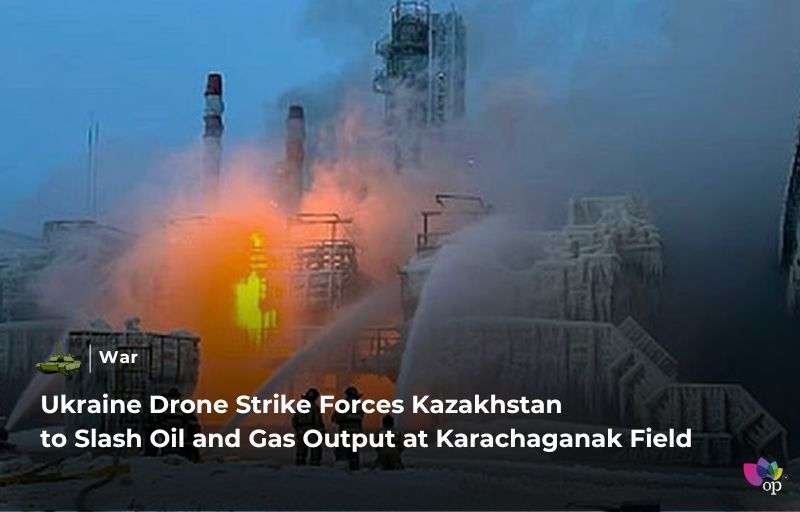
According to the reports on Monday (20 October), A Ukrainian drone attack targeted Russia’s Orenburg gas plant, forcing Kazakhstan to reduce production at its Karachaganak oil and gas field by 25 to 30 percent. The attack disrupted one of the world’s largest gas processing plants, which had to suspend its intake of gas from Kazakhstan. Ukraine confirmed it hit facilities in both the Orenburg and Samara regions, highlighting a strategic effort to disrupt Russian energy infrastructure.
The Karachaganak field, normally producing around 35,000 metric tons per day, saw output drop to between 25,000 and 28,000 metric tons. This reduction is significant given the field’s overall production of roughly 263,000 barrels of oil per day in 2024. The field’s output is transported via the Caspian Pipeline Consortium through Russian Black Sea terminals and the Druzhba pipeline to Germany.
Karachaganak is operated by a consortium that includes Chevron, Shell, and Eni, with additional stakes held by Lukoil and Kazakhstan’s KazMunayGaz. The plant and consortium did not provide immediate comments on the impact or expected recovery timeline. Gazprom, which controls Orenburg, may resume some gas intake, but normal supply levels remain uncertain.
Since August, Kyiv has intensified its attacks on Russian refineries and energy facilities, aiming to disrupt fuel supplies and limit Moscow’s funding. The attacks on Orenburg and other energy sites illustrate the increasing vulnerability of regional energy infrastructure amid ongoing conflict. The situation underscores the broader geopolitical and economic ramifications for Russia, Kazakhstan, and international energy markets.
References
Ukraine Drone Strike Forces Kazakhstan to Slash Oil and Gas Output at Karachaganak Field