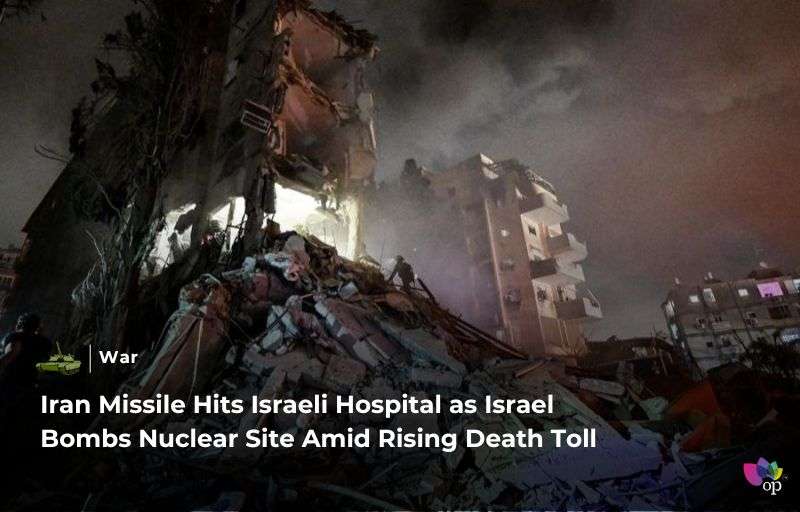
Iran launched approximately 30 ballistic missiles at Israeli territory early Thursday (19 June, local time), with one directly hitting the Soroka Medical Centre in southern Israel. The strike caused significant damage to the facility, injuring multiple people and forcing the hospital to limit admissions to only life-threatening cases. Another missile struck a high-rise and nearby residential buildings near Tel Aviv, leaving at least 40 people wounded, according to Israel’s emergency services.
In response, Israel carried out a retaliatory strike on Iran’s Arak heavy water reactor, targeting its reactor core seal to prevent potential plutonium production. The Israeli military also claimed to have struck another nuclear-related site near Natanz. Although Iran’s state media confirmed the attack, it denied any radiation risk and reported that the facility had been evacuated with no civilian damage nearby.
Israeli Prime Minister Benjamin Netanyahu condemned the hospital attack, vowing to make Iran’s leadership “pay the full price.” With missile and drone barrages exchanged between both countries, Israel’s defense system has intercepted many incoming threats, though officials admit the system is not foolproof. The Soroka hospital, which serves over a million people, was among several facilities activating emergency protocols, including moving patients underground.
As the conflict entered its seventh day, a Washington-based human rights organization reported 639 deaths in Iran due to Israeli strikes, including 263 civilians and 154 security personnel. These figures, compiled from Iranian news outlets and informants, significantly exceed the last official Iranian toll of 224 deaths and 1,277 injuries. Tehran has not updated its casualty numbers in recent days, adding to uncertainty over the scale of destruction.
References