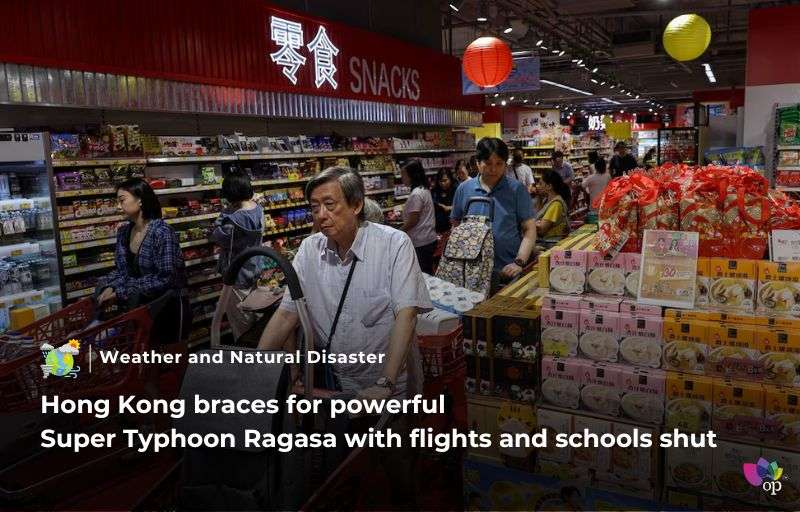
Hong Kong prepared for the arrival of Super Typhoon Ragasa on Tuesday (23 September), one of the strongest storms in years, prompting widespread closures and disruptions. Schools and many businesses were shut, while most passenger flights from the city’s airport were scheduled to be suspended until early Thursday (25 September). Authorities planned to raise the typhoon signal to 8, the third highest warning level, which would force most transport services and remaining businesses to halt operations.
The Hong Kong Observatory reported that Ragasa was packing hurricane-force winds of up to 220 km/h (137 mph) as it moved closer to the coast of southern Guangdong province in China. Officials warned of heavy rain, significant storm surges, and rising sea levels similar to those experienced during Typhoon Hato in 2017 and Typhoon Mangkhut in 2018, both of which caused billions in damages. Water levels were forecast to rise about 2 meters in coastal areas, with some locations potentially seeing surges of up to 4 to 5 meters.
Residents responded by stockpiling daily necessities and fortifying their homes. Long lines formed at supermarkets, milk quickly sold out, and vegetable prices tripled in fresh-produce markets as people prepared for days of potential disruption. Local authorities distributed sandbags to help residents protect low-lying areas from flooding and storm damage.
The storm’s impact extended beyond Hong Kong as Chinese authorities activated flood control measures in several southern provinces and warned of heavy rains. Macau, the world’s largest gambling hub, also braced for significant effects with school closures and evacuation plans underway. In the Philippines, President Ferdinand Marcos Jr ordered government agencies to be on full alert after Ragasa swept through the northern region on Monday.
References
Hong Kong braces for powerful Super Typhoon Ragasa with flights and schools shut